
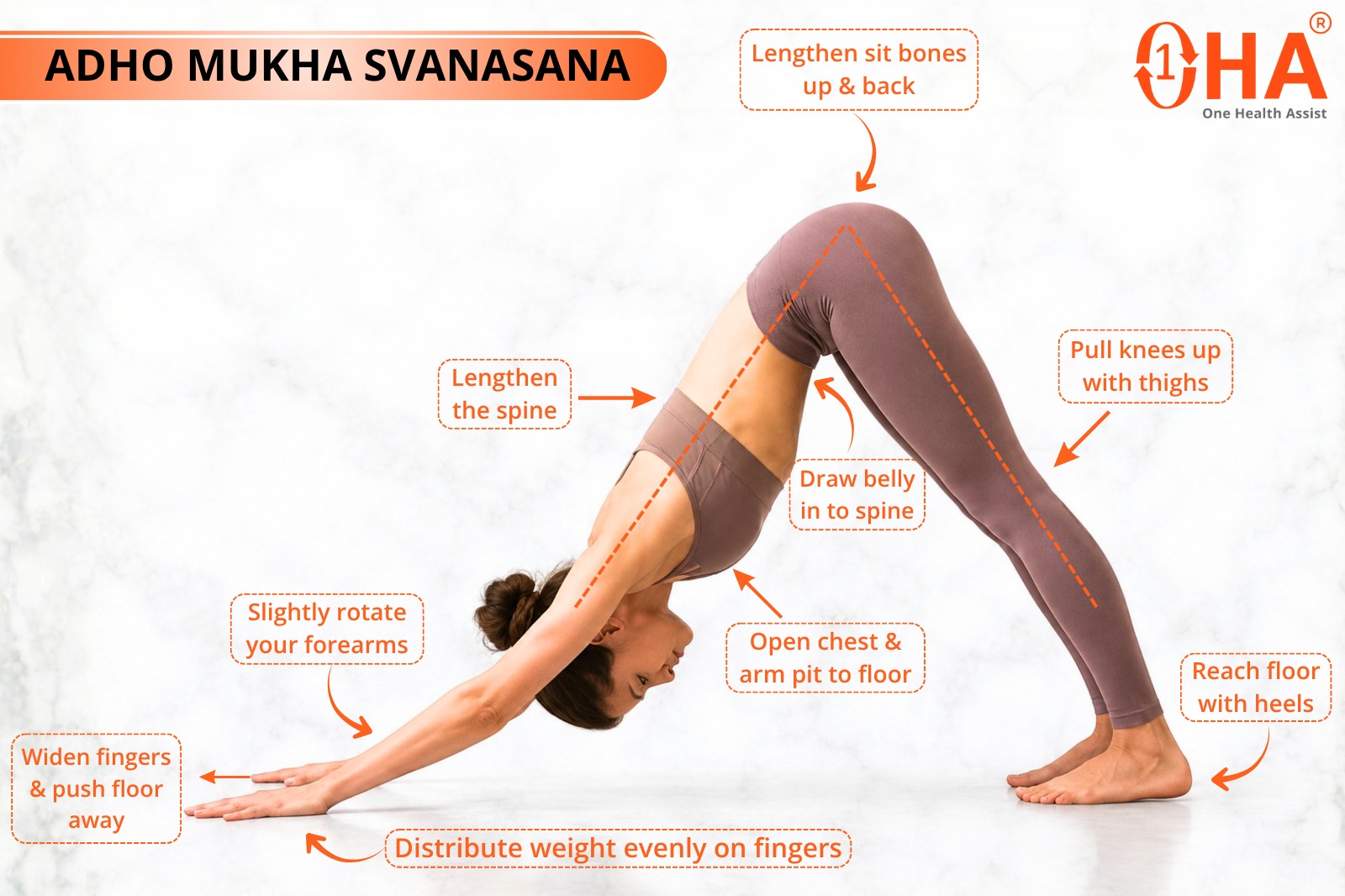
Adho Mukha Svanasana, commonly known as Downward Facing Dog Pose, is a foundational yoga posture that stretches the body, strengthens muscles, improves posture, and supports relaxation. This pose is practiced in many yoga styles including Hatha Yoga, Ashtanga Yoga, Vinyasa Yoga, and Power Yoga. The popularity of Adho Mukha Svanasana comes from the fact that it targets multiple muscle groups while also calming the mind.
The term Adho Mukha Svanasana comes from Sanskrit. “Adho” means downward, “Mukha” means face, and “Svana” means dog. The posture resembles a dog stretching its body downward, which is why it is called the Downward Facing Dog Pose.
Table of Contents
- What is Adho Mukha Svanasana?
- Meaning of Adho Mukha Svanasana
- Importance of Adho Mukha Svanasana in Yoga
- How to Do Adho Mukha Svanasana
- Breathing Technique During Adho Mukha Svanasana
- Benefits of Adho Mukha Svanasana
- Physical Benefits of Adho Mukha Svanasana
- Mental Benefits of Adho Mukha Svanasana
- Common Mistakes in Adho Mukha Svanasana
- Precautions and Safety Tips
- Best Time to Practice Adho Mukha Svanasana
- Beginners’ Tips for Adho Mukha Svanasana
- Variations of Adho Mukha Svanasana
- Adho Mukha Svanasana for Weight Management
- Adho Mukha Svanasana for Flexibility
- Adho Mukha Svanasana for Back Health
- Adho Mukha Svanasana and Stress Relief
What is Adho Mukha Svanasana?
Adho Mukha Svanasana is a standing inversion yoga posture where the body forms an inverted “V” shape. In Adho Mukha Svanasana, both hands and feet remain grounded while the hips are lifted upward. The spine lengthens, the shoulders stretch, and the legs become active.
Adho Mukha Svanasana is often used as a transition pose in yoga sequences, but it is also powerful enough to be practiced independently. This posture activates the entire body while simultaneously promoting relaxation.
Meaning of Adho Mukha Svanasana
The Sanskrit name Adho Mukha Svanasana has a deep and descriptive meaning:
- Adho = Downward
- Mukha = Face
- Svana = Dog
- Asana = Pose or posture
So, Adho Mukha Svanasana means “Downward-Facing Dog Pose.”
This posture is inspired by the natural way dogs stretch themselves after resting. It reflects a graceful extension of the body, symbolizing energy, alertness, relaxation, and flexibility. In yoga, this asana is widely practiced because it helps lengthen the spine, awaken the body, and improve overall balance between strength and calmness.
Importance of Adho Mukha Svanasana in Yoga
Adho Mukha Svanasana is considered one of the foundational yoga poses because it brings together stretching, strengthening, balance, and breath awareness in a single posture. It is often taught early in yoga practice since it helps the body gradually prepare for more demanding asanas.
1) Builds a Strong Foundation
This pose engages multiple muscle groups at once, especially the arms, shoulders, back, legs, and core. Because of this, it helps develop overall body strength and stability while also encouraging proper posture and alignment.
2) Improves Flexibility and Mobility
Regular practice of Adho Mukha Svanasana helps lengthen the hamstrings, calves, spine, and shoulders. Over time, this can improve mobility, reduce stiffness, and make movement feel more fluid and controlled.
3) Supports Breath Awareness
Like many important yoga postures, this asana connects movement with breathing. Holding the pose while maintaining steady breath encourages mindfulness, concentration, and nervous system calmness, which are central to yoga practice.
4) Common in Surya Namaskar
Adho Mukha Svanasana is an essential part of Surya Namaskar, or Sun Salutation sequences. Its inclusion makes it highly important in traditional yoga flows because it helps transition smoothly between postures while restoring energy and alignment.
5) Acts as a Mild Inversion
Since the head is lower than the heart, the pose functions as a gentle inversion. Mild inversions are often valued for their refreshing effect on the body and may support circulation and release physical fatigue.
6) Enhances Coordination and Endurance
Practicing this pose regularly may improve body awareness, balance, coordination, and stamina. It teaches the practitioner how to distribute weight evenly and stay steady under physical effort.
How to Do Adho Mukha Svanasana
Practicing Adho Mukha Svanasana correctly is important for maximum benefits and injury prevention.
Step-by-Step Instructions
Step 1: Start on All Fours
Begin in a tabletop position with hands directly under shoulders and knees under hips.
Step 2: Spread the Fingers
Spread fingers wide and press palms firmly into the mat.
Step 3: Lift the Hips
Exhale slowly and lift the knees away from the floor while pushing the hips upward.
Step 4: Straighten the Legs
Gradually straighten the legs as much as comfortable. Keep a slight bend in the knees if needed.
Step 5: Lengthen the Spine
Push the chest gently toward the thighs while extending the spine.
Step 6: Relax the Head
Keep the head relaxed between the arms without straining the neck.
Step 7: Hold the Pose
Stay in Adho Mukha Svanasana for 20–60 seconds while breathing deeply.
Step 8: Release Slowly
Bend the knees and return to tabletop position.
Breathing Technique During Adho Mukha Svanasana
Breathing plays an essential role in Adho Mukha Svanasana because it helps maintain stability, relaxation, balance, and body awareness throughout the posture. In yoga practice, proper breathing is closely connected with movement, flexibility, and mental focus. Controlled breathing makes the pose feel smoother, more comfortable, and more effective.
Basic Breathing Pattern
Follow these simple breathing steps while practicing the pose:
- Inhale deeply while preparing for the posture.
- Exhale slowly while lifting the hips upward into the pose.
- Continue with slow, steady, and natural breathing.
- Avoid holding the breath at any point.
Maintaining a calm breathing rhythm helps the body remain relaxed and stable during the stretch.
Benefits of Breathing in Adho Mukha Svanasana
1) Improves Relaxation and Stability
Controlled breathing helps relax the nervous system and reduces unnecessary tension in the muscles. This allows the body to settle more comfortably into the posture while improving overall stability and balance.
2) Enhances Concentration and Mindfulness
Slow and mindful breathing encourages mental focus during yoga practice. Instead of rushing through the pose, synchronized breathing helps practitioners stay aware of body alignment, movement, and relaxation.
3) Supports Better Oxygen Flow
Deep breathing improves oxygen circulation throughout the body. Better oxygen flow may help increase endurance, reduce fatigue, and make it easier to hold the posture for longer periods.
4) Reduces Muscle Tension
Steady breathing signals the body to relax, which can help release stiffness in areas such as the shoulders, back, neck, and legs. This may improve flexibility and comfort during the pose.
5) Encourages Better Body Awareness
Breath awareness helps practitioners notice how the body feels in the posture. This improves coordination and allows small posture adjustments that support safer and more effective practice.
Why You Should Avoid Holding the Breath
Holding the breath during yoga can create unnecessary physical tension and mental discomfort. It may also make the posture feel more difficult than it actually is. Maintaining a smooth and natural breathing rhythm helps support relaxed muscles and controlled body movement throughout the pose.
Long-Term Benefits of Breath Control
Regular practice of mindful breathing during Adho Mukha Svanasana may also support relaxation outside yoga sessions. Many people use breathing techniques to:
- Manage stress and anxiety
- Improve concentration and focus
- Support emotional balance
- Promote calmness and mental clarity
Benefits of Adho Mukha Svanasana
Adho Mukha Svanasana offers a wide range of physical and mental health benefits, which is why it is considered one of the most important foundational yoga poses. The posture combines stretching, strengthening, balance, and controlled breathing in a single movement, making it highly effective for overall wellness and body conditioning.
- Improves flexibility
- Strengthens shoulders and arms
- Supports spinal health
- Improves posture
- Reduces stiffness
- Enhances blood circulation
- Relieves stress and tension
- Activates core muscles
- Improves balance and stability
- Boosts energy levels and endurance
1) Improves Full-Body Strength
Many yoga practitioners consider Adho Mukha Svanasana a full-body yoga posture because it engages several muscle groups simultaneously. The pose activates the:
- Arms and shoulders
- Back and core muscles
- Hamstrings and calves
- Legs and ankles
Supporting body weight in this position helps build muscular endurance, stability, and overall body strength.
2) Enhances Flexibility
One of the biggest advantages of Adho Mukha Svanasana is its ability to combine strength and flexibility together. While the muscles work to stabilize the body, the posture also provides a deep stretch to the:
- Spine
- Hamstrings
- Calves
- Shoulders
- Back muscles
Regular practice may gradually improve mobility and reduce tightness throughout the body.
3) Supports Better Posture and Spinal Alignment
Modern lifestyles often involve prolonged sitting, poor posture, and excessive screen time, which can create tension in the neck, shoulders, and back. Adho Mukha Svanasana may help:
- Lengthen the spine
- Open the shoulders
- Improve posture alignment
- Reduce muscular stiffness
This makes the posture especially beneficial for people with sedentary routines.
4) Improves Blood Circulation and Energy
The posture is commonly included in yoga sequences because it may help improve circulation and refresh the body. Since the head is positioned lower than the heart, Adho Mukha Svanasana acts as a mild inversion that may support healthy blood flow and create an energized feeling after practice.
Many practitioners report feeling both physically refreshed and mentally alert after performing the pose.
5) Helps Reduce Stress and Mental Fatigue
Another important benefit of Adho Mukha Svanasana is its calming effect on the mind. The combination of stretching and controlled breathing encourages relaxation and mindfulness.
Regular practice may help:
- Reduce stress and anxiety
- Release physical tension
- Improve focus and concentration
- Support emotional balance
- Promote mental calmness
Practicing the posture in a peaceful environment may further enhance these relaxation benefits.
6) Activates Core Stability and Balance
Although the pose appears simple, it requires steady engagement of the core muscles to maintain balance and alignment. This helps improve:
- Coordination
- Stability
- Body awareness
- Balance control
Over time, regular practice may contribute to better movement efficiency and posture during daily activities.
7) Suitable for Different Fitness Levels
One of the reasons Adho Mukha Svanasana is so widely practiced is because it can be modified according to individual flexibility and strength levels. Beginners can perform gentler variations, while experienced practitioners may deepen the stretch and improve endurance over time.
Physical Benefits of Adho Mukha Svanasana
1. Strengthens Upper Body
Adho Mukha Svanasana strengthens the wrists, arms, shoulders, and upper back. Supporting body weight during the pose builds muscular endurance and improves upper body stability over time.
The posture also activates the chest and shoulder muscles, helping improve overall strength and posture alignment. Regular practice may help increase arm and shoulder endurance, especially when included in dynamic yoga sequences.
2. Improves Flexibility
Adho Mukha Svanasana stretches the hamstrings, calves, spine, and shoulders. Regular practice gradually improves mobility and helps reduce tightness caused by long hours of sitting or lack of movement.
The posture creates a deep stretch along the back of the body, encouraging better flexibility and smoother body movement. Improved flexibility may also help reduce muscle stiffness and improve posture awareness.
3. Supports Spine Health
The spinal extension in Adho Mukha Svanasana helps reduce stiffness and improves posture. Lengthening the spine during the pose may help relieve mild tension in the back and neck muscles.
Modern lifestyles often create pressure on the spine because of poor sitting habits and reduced movement. Practicing Adho Mukha Svanasana regularly may support better spinal alignment and body balance.
4. Enhances Blood Circulation
Since Adho Mukha Svanasana is a mild inversion, it may encourage healthy blood flow throughout the body. Improved circulation may help increase oxygen supply to muscles and support overall body function.
Many yoga practitioners feel refreshed after practicing Adho Mukha Svanasana because the posture may help energize the body and reduce physical fatigue.
5. Improves Posture
Poor posture caused by prolonged sitting, screen time, and inactive lifestyles may improve with consistent Adho Mukha Svanasana practice. The posture strengthens the back, shoulders, and core muscles that support proper alignment.
6. Activates Leg Muscles
Adho Mukha Svanasana engages the thighs, calves, hamstrings, and ankles, improving lower body strength and stability. Keeping the legs active during the pose helps build endurance and muscle engagement.
The posture also stretches the back of the legs, which may improve flexibility and support smoother body movement over time.
7. Supports Joint Mobility
The posture gently mobilizes multiple joints including the shoulders, hips, knees, ankles, and wrists. Regular movement through these joints may help improve flexibility and reduce stiffness.
Maintaining joint mobility is important for daily movement, posture, and overall physical comfort. Practicing Adho Mukha Svanasana consistently may support better range of motion and body coordination naturally.
Mental Benefits of Adho Mukha Svanasana
1. Reduces Stress
Deep breathing and stretching during Adho Mukha Svanasana may help calm the mind and relax the body. The posture encourages slow and controlled breathing, which can support nervous system relaxation and reduce feelings of mental stress after a busy day.
Regular practice of Adho Mukha Svanasana may also help release physical tension stored in the shoulders, neck, and back. As the muscles relax, many people experience a greater sense of calmness and emotional balance.
2. Improves Focus
Maintaining balance in Adho Mukha Svanasana requires concentration, body awareness, and mindful breathing. Focusing on posture alignment and steady breathing may help improve mental clarity and attention.
Yoga practitioners often use Adho Mukha Svanasana to develop mindfulness during practice. Staying present in the posture can help reduce distractions and improve overall focus over time.
3. Boosts Energy
Many people feel refreshed and energized after practicing Adho Mukha Svanasana. The mild inversion and full-body engagement may help improve circulation and create a feeling of physical activation.
Practicing Adho Mukha Svanasana in the morning may help wake up the body, loosen stiff muscles, and prepare the mind for daily activities. It is commonly included in energizing yoga sequences such as Surya Namaskar.
4. Supports Relaxation
Adho Mukha Svanasana may help reduce mental fatigue, muscle tightness, and overall body tension. The combination of stretching and breathing encourages relaxation without complete inactivity.
Many yoga practitioners include Adho Mukha Svanasana in stress-relief and relaxation-focused yoga routines because the posture helps create a balance between physical effort and mental calmness. Consistent practice may support emotional well-being and a more relaxed state of mind.
Common Mistakes in Adho Mukha Svanasana
Avoiding mistakes in Adho Mukha Svanasana is important for safety, comfort, and effectiveness. Correct posture alignment helps the body receive the full benefits of the pose while reducing unnecessary strain on the muscles and joints. Beginners often make small alignment errors that can affect balance, breathing, and overall body positioning.
Rounded Back
Many beginners round the spine instead of lengthening it. A rounded back may reduce the stretch in the spine and create tension in the shoulders and lower back. Focusing on lifting the hips upward and slightly bending the knees can help create better spinal alignment.
Locked Knees
Overstraightening or locking the knees may create unnecessary strain on the joints and hamstrings. Keeping a soft bend in the knees allows the body to maintain stability and reduces pressure on the legs.
Collapsed Shoulders
Shoulders should remain active and stable during Adho Mukha Svanasana. Allowing the shoulders to collapse may place excess pressure on the neck and wrists. Pressing firmly through the hands and engaging the upper back muscles can improve support and posture.
Incorrect Hand Placement
Hands placed too close together or too wide apart may reduce stability and balance in the pose. Proper hand placement helps distribute body weight evenly and improves alignment through the shoulders and arms.
Neck Strain
The neck should remain relaxed during Adho Mukha Svanasana. Looking upward or creating tension in the neck may cause discomfort. The head should stay naturally aligned between the arms while the gaze remains soft.
Another common mistake is forcing the heels to touch the floor before the body is ready. Flexibility develops gradually, and lifting the heels slightly is completely normal for beginners. Prioritizing spine length and overall posture is more important than achieving a perfect shape immediately.
Breathing is equally important during Adho Mukha Svanasana. Holding the breath can create tension and reduce relaxation. Slow, steady breathing helps improve focus, stability, and comfort while practicing the posture.
Precautions and Safety Tips for Adho Mukha Svanasana
Although Adho Mukha Svanasana is generally considered a safe and beneficial yoga posture, certain precautions are important to prevent discomfort or injury. Proper alignment, controlled breathing, and gradual practice help make the pose safer and more effective.
Avoid or Modify the Pose if You Have:
- Wrist injuries or wrist pain
- Severe shoulder pain or shoulder stiffness
- High blood pressure
- Vertigo or dizziness
- Recent surgery
- Glaucoma
- Neck pain or upper back strain
Wrist and Shoulder Safety
Because Adho Mukha Svanasana places body weight on the hands and shoulders, it may cause discomfort for people with weak wrists or shoulder issues. In such cases, using yoga props, practicing against a wall, or reducing the load on the arms can help make the pose more manageable.
Caution for Inversion-Related Conditions
Adho Mukha Svanasana is a mild inversion, so extra care is needed for people with:
- High blood pressure
- Vertigo
- Glaucoma
- Frequent dizziness
Sudden head movement or staying in the pose for too long may not be suitable for everyone. Gentle practice and shorter holds are usually safer.
Pregnancy and Medical Conditions
Pregnant women and people with any medical condition should consult a qualified healthcare professional or certified yoga instructor before practicing this pose. Individual modifications may be necessary depending on health status, flexibility, and physical limitations.
Do Not Overstretch
One of the most important safety rules in yoga is to avoid pushing the body beyond its natural limit. Adho Mukha Svanasana should create a deep stretch, but never sharp pain, strain, or numbness.
Practicing slowly and respecting the body’s signals helps prevent injury and supports steady progress.
Beginner Safety Tips
Beginners may benefit from learning Adho Mukha Svanasana under the supervision of a certified yoga instructor. Proper guidance can help with:
- Correct hand and foot placement
- Better spine alignment
- Safer shoulder engagement
- Balanced weight distribution
- Reduced risk of strain
Best Time to Practice Adho Mukha Svanasana
The best time to practice Adho Mukha Svanasana is usually early morning on an empty stomach. Morning yoga practice may help energize the body, improve flexibility, and prepare the mind for the day ahead. After waking up, this posture can help stimulate circulation, awaken the muscles, and improve overall body movement.
Morning Practice Benefits
Practicing Adho Mukha Svanasana in the morning may help:
- Increase energy levels
- Improve concentration and focus
- Enhance flexibility and mobility
- Activate muscles and circulation
- Prepare the body for daily activities
Many yoga practitioners include this pose in their morning routine because it helps refresh both the body and mind.
Evening Practice Benefits
Although morning is commonly recommended, Adho Mukha Svanasana can also be practiced in the evening. After long hours of sitting, working, or physical activity, the body often develops stiffness in areas such as the:
- Back
- Shoulders
- Hamstrings
- Calves
Practicing the posture in the evening may help release tension, relax tight muscles, and reduce physical fatigue accumulated during the day.
Practice on an Empty or Light Stomach
Yoga postures are generally more comfortable when practiced on an empty or light stomach. It is usually recommended to:
- Practice before meals, or
- Wait at least 2–3 hours after a heavy meal
This may help prevent discomfort, bloating, or pressure during stretching and movement.
Consistency Matters Most
Some people prefer practicing Adho Mukha Svanasana for energy and flexibility in the morning, while others use it for relaxation and stress relief in the evening. The ideal timing depends on personal comfort, schedule, and wellness goals.
However, consistency is often more important than the exact time of practice. Even a few minutes of regular daily practice may gradually improve:
- Flexibility
- Posture
- Strength
- Mobility
- Overall physical well-being
Beginners’ Tips for Adho Mukha Svanasana
Beginners may initially find Adho Mukha Svanasana challenging because the pose requires balance, coordination, flexibility, and upper body strength together. Tight hamstrings, stiff shoulders, or weak wrists can make the posture feel uncomfortable in the beginning. However, gradual and mindful practice helps the body adapt over time.
Helpful Tips for Beginners
- Bend the knees slightly
- Focus on spine length instead of straight legs
- Use yoga blocks under the hands
- Practice consistently and patiently
- Avoid forcing flexibility
- Keep breathing slow and steady
Focus on Proper Alignment
One of the most important beginner tips is to prioritize correct alignment over appearance. Trying to force the heels to touch the floor is not necessary in the early stages of practice.
Instead, focus on:
- Keeping the spine long
- Maintaining stable shoulders
- Distributing weight evenly
- Relaxing the neck and head
Good alignment helps improve safety, comfort, and long-term progress.
Use Props for Support
Yoga props can make the posture more accessible and comfortable for beginners. Helpful supports include:
- Yoga blocks
- Folded blankets
- Wall-supported variations
- Cushioned yoga mats
These modifications may reduce strain on the wrists, shoulders, and hamstrings while improving stability.
Be Patient With Progress
It is normal for the body to shake slightly or feel tight during the early stages of practice. Regular practice gradually improves:
- Muscle strength
- Flexibility
- Balance
- Coordination
- Posture awareness
Taking breaks when needed and avoiding overexertion can help prevent unnecessary discomfort or injuries.
Importance of Breathing
Beginners should pay close attention to slow and controlled breathing during the pose. Steady breathing helps:
- Relax the muscles
- Improve focus
- Increase stability
- Reduce physical tension
Breath awareness also makes the posture feel calmer and easier to maintain.
Variations of Adho Mukha Svanasana
There are several variations of Adho Mukha Svanasana that help practitioners modify the posture according to their flexibility, strength, comfort level, and yoga experience. These variations make the pose more accessible for beginners while also offering advanced challenges for experienced yoga practitioners.
Three-Legged Downward Dog
In this variation, one leg is lifted upward while maintaining balance and stability through the hands and grounded foot. Three-Legged Downward Dog increases core engagement, strengthens the shoulders, and provides a deeper stretch for the hips and legs. It is commonly practiced in advanced yoga flows and balance-focused sequences.
Puppy Pose Variation
Puppy Pose is a gentler variation suitable for beginners and people with tight shoulders or limited flexibility. In this posture, the hips remain above the knees while the chest lowers toward the floor, creating a comfortable stretch for the shoulders, upper back, and spine. Puppy Pose is often used in relaxation and mobility-focused yoga sessions.
Wall-Assisted Variation
In the Wall-Assisted Variation, the hands are placed on a wall instead of the floor. This modification reduces pressure on the wrists, shoulders, and hamstrings, making it ideal for seniors, beginners, or people recovering from mild discomfort. The wall support also helps improve posture alignment and body awareness.
Bent-Knee Variation
The Bent-Knee Variation is suitable for individuals with limited hamstring flexibility or lower back tightness. Slightly bending the knees allows the spine to lengthen comfortably without forcing the legs to straighten completely. This variation helps beginners focus on proper alignment and breathing instead of flexibility alone.
Adho Mukha Svanasana for Weight Management
Adho Mukha Svanasana may support weight management when combined with a healthy lifestyle, regular movement, and balanced eating habits. While yoga is often linked with flexibility and relaxation, this posture also engages several major muscle groups and contributes to overall physical activity.
How Adho Mukha Svanasana May Support Weight Management
1) Engages Multiple Muscles
This pose activates the:
- Core
- Arms
- Shoulders
- Back
- Legs
Because several muscle groups work together at the same time, the posture contributes to full-body conditioning and muscular endurance.
2) Supports Strength and Stamina
Practicing Adho Mukha Svanasana regularly may help improve strength, stability, and stamina, which are important for maintaining an active lifestyle. Better stamina can make it easier to stay consistent with other forms of exercise and daily physical activity.
3) May Improve Circulation and Metabolism
The posture encourages movement, body engagement, and controlled breathing. These elements may support better circulation and help the body remain active and responsive. When practiced as part of a regular yoga routine, it can contribute to overall fitness and metabolic activity.
4) Works Well in Dynamic Yoga Sequences
When included in flowing practices such as Surya Namaskar or Vinyasa Yoga, Adho Mukha Svanasana may contribute to calorie burning and improved endurance. Repeated movement through yoga poses can raise activity levels and support weight-related wellness goals.
5) Encourages Mindful Habits
Yoga also helps build body awareness and mindfulness. This can influence daily habits in a positive way by encouraging more conscious choices related to food, movement, sleep, and stress management.
Stress Reduction and Healthy Weight Management
Adho Mukha Svanasana may also help reduce stress, which is sometimes linked with emotional eating, low motivation, and reduced physical activity. Lower stress levels can support better self-control and more balanced lifestyle habits.
Best Results Come from a Complete Routine
Although Adho Mukha Svanasana alone is not a complete weight-loss solution, it can be a valuable part of a broader wellness plan. For best results, it should be combined with:
- A balanced diet
- Proper sleep
- Good hydration
- Regular exercise
- Stress management
Adho Mukha Svanasana for Flexibility
Flexibility is one of the most noticeable benefits of Adho Mukha Svanasana. The posture creates a deep, full-body stretch that helps improve mobility and gradually reduce muscular tightness.
Areas Stretched in Adho Mukha Svanasana
Regular practice stretches the:
- Hamstrings
- Calves
- Achilles tendons
- Spine
- Shoulders
- Chest
How It Improves Flexibility
Adho Mukha Svanasana helps lengthen tight muscles throughout the body. This is especially useful for people who sit for long periods, as prolonged sitting often causes stiffness in the legs, hips, shoulders, and back.
The pose also encourages spinal elongation, which may improve posture and body alignment. As flexibility increases, everyday movements can feel smoother, easier, and more comfortable.
Flexibility for Beginners
For beginners, flexibility develops gradually. It is important not to force the body into the posture. Slow progress, proper alignment, and consistent practice are far more effective than trying to push too deeply too soon.
Why Athletes and Active People Use It
Athletes, fitness enthusiasts, and yoga practitioners often include Adho Mukha Svanasana in warm-up and cool-down routines. It helps prepare the muscles for movement and supports recovery after physical activity.
Joint Mobility Benefits
Regular practice may also improve mobility in the:
- Shoulders
- Hips
- Knees
- Ankles
Better flexibility and joint mobility can contribute to improved balance, posture, and overall physical performance.
Adho Mukha Svanasana for Back Health
Modern lifestyles often lead to back discomfort because of prolonged sitting, reduced movement, and poor posture. Long hours spent on computers or mobile devices can create stiffness in the neck, shoulders, and lower back.
How It Supports the Back
Adho Mukha Svanasana helps lengthen the spine and release tension in the back muscles. Gentle spinal decompression in the pose may improve posture awareness and reduce tightness caused by daily stress and inactivity.
The posture also stretches the:
- Hamstrings
- Shoulders
- Calves
These muscle groups are closely connected to spinal alignment. When they are tight, they can indirectly contribute to discomfort in the upper and lower back.
Strengthens Support Muscles
Regular practice may help strengthen the muscles around the spine, including the:
- Core
- Upper back
- Shoulder stabilizers
Stronger support muscles can improve stability and reduce strain on the back during daily activities.
Important Precautions
People with severe back problems, slipped discs, or chronic spinal conditions should practice Adho Mukha Svanasana carefully under professional guidance. Proper alignment and modifications are important to avoid unnecessary strain.
Adho Mukha Svanasana and Stress Relief
Stress affects both physical and mental health. Adho Mukha Svanasana encourages mindful breathing and muscle relaxation, which may help calm the nervous system and reduce mental fatigue.
Mental and Emotional Benefits
Practicing the pose in a calm environment may support:
- Mental clarity
- Emotional balance
- Reduced tension
- Better focus
Many yoga practitioners include this posture in relaxation-focused sessions because it combines stretching with controlled breathing.
Releasing Stored Tension
Stress often shows up physically in the shoulders, neck, and back. Adho Mukha Svanasana may help release this stored tension, allowing both the body and mind to feel lighter and more relaxed.
Daily Stress Support
In today’s fast-paced lifestyle, screen fatigue, mental stress, and lack of movement are common. Practicing Adho Mukha Svanasana for even a few minutes daily may help create a sense of calm and improve overall emotional well-being.
Table of Comparison
Yoga poses offer different benefits depending on their purpose, body alignment, and intensity level. While Adho Mukha Svanasana focuses on full-body stretching and strengthening, poses like Bhujangasana, Tadasana, and Balasana support posture improvement, relaxation, and spinal mobility in different ways. Understanding the differences between these yoga poses can help practitioners choose the right posture according to their fitness level, flexibility, and wellness goals.
Feature |
Adho Mukha Svanasana |
Bhujangasana |
Tadasana |
Balasana |
| Difficulty Level | Moderate | Easy | Easy | Easy |
| Main Focus | Full Body Stretch | Spine Extension | Posture Alignment | Relaxation |
| Strength Building | Yes | Mild | Minimal | No |
| Flexibility Improvement | High | Moderate | Low | Moderate |
| Stress Relief | Yes | Yes | Mild | High |
| Balance Requirement | Moderate | Low | Low | Low |
| Suitable for Beginners | Yes | Yes | Yes | Yes |
| Core Activation | Moderate | Mild | Mild | Minimal |
| Upper Body Engagement | High | Moderate | Low | Minimal |
| Energy Boosting | High | Moderate | Mild | Low |
Each yoga posture offers unique physical and mental health benefits. Adho Mukha Svanasana stands out as a powerful full-body yoga pose that combines flexibility, strength, balance, and energy enhancement together. In comparison, Bhujangasana mainly supports spinal flexibility, Tadasana improves posture and body alignment, while Balasana is highly effective for relaxation and stress relief.
People Also Ask
Is Adho Mukha Svanasana good for beginners?
Yes, It is suitable for beginners when practiced with proper guidance and alignment. Beginners can also modify the pose by slightly bending the knees to make it more comfortable and accessible.
How long should you hold Adho Mukha Svanasana?
Most people hold Adho Mukha Svanasana for around 20–60 seconds depending on their comfort level and yoga experience. With regular practice, the duration can gradually increase as strength and flexibility improve.
Can Adho Mukha Svanasana reduce stress?
Yes, It may help reduce stress by encouraging deep breathing and gentle stretching. The posture can calm the nervous system and create a feeling of relaxation after practice.
Does Adho Mukha Svanasana improve flexibility?
Regular practice of Adho Mukha Svanasana may improve flexibility in the hamstrings, calves, shoulders, and spine. Over time, the body becomes more mobile and less stiff.
Is Adho Mukha Svanasana part of Surya Namaskar?
Yes, It is an important posture in Surya Namaskar or Sun Salutation sequences. It is commonly practiced in many yoga styles including Hatha and Vinyasa Yoga.
Can Adho Mukha Svanasana help posture?
It may support better posture by strengthening the shoulders, back, and core muscles. It also helps lengthen the spine and reduce body stiffness caused by prolonged sitting.
FAQs
1. What does Adho Mukha Svanasana mean?
It translates to Downward Facing Dog Pose in Sanskrit. The name comes from the body position, which resembles a dog stretching downward.
2. Is Adho Mukha Svanasana difficult?
It may feel slightly challenging for beginners in the beginning. However, consistent practice and proper alignment make the posture easier and more comfortable over time.
3. Can Adho Mukha Svanasana help back pain?
It may help reduce mild back stiffness and posture-related discomfort by stretching and lengthening the spine. People with severe back pain should consult a healthcare professional before practicing.
4. How often should I practice Adho Mukha Svanasana?
Many yoga practitioners include Adho Mukha Svanasana in their daily yoga or stretching routine. Practicing regularly may help improve flexibility, posture, and overall body strength.
5. Should heels touch the floor in Adho Mukha Svanasana?
No, it is not necessary for the heels to touch the floor during Adho Mukha Svanasana. Flexibility develops gradually, and slight heel lifting is completely normal for beginners.
6. Can seniors practice Adho Mukha Svanasana?
Yes, seniors can practice modified versions of Adho Mukha Svanasana with proper support and guidance. Using yoga blocks or wall support may make the posture safer and more comfortable.
7. What muscles work during Adho Mukha Svanasana?
Adho Mukha Svanasana activates several muscle groups including the shoulders, arms, core, back, hamstrings, calves, and legs. It is considered a full-body strengthening and stretching posture.
8. Is Adho Mukha Svanasana good for energy?
Many people feel refreshed and energized after practicing Adho Mukha Svanasana. The pose may improve circulation and help release physical tension from the body.
Conclusion
It is one of the most beneficial and widely practiced yoga poses because it combines strength, flexibility, balance, and relaxation in a single posture. Whether practiced independently or as part of a yoga sequence, it offers benefits for both the body and mind.
From improving posture and flexibility to supporting stress relief and body awareness, Adho Mukha Svanasana remains a foundational yoga posture suitable for beginners as well as experienced practitioners. The pose encourages mindful breathing, muscle engagement, and mental focus.
DISCLAIMER: THIS WEBSITE DOES NOT PROVIDE MEDICAL ADVICE
The information, including but not limited to, text, graphics, images and other material contained on this website are for informational purposes only. No material on this site is intended to be a substitute for professional medical advice, diagnosis or treatment. Always seek the advice of your physician or other qualified health care provider with any questions you may have regarding a medical condition or treatment and before undertaking a new health care regimen, and never disregard professional medical advice or delay in seeking it because of something you have read on this website.