
Guava is one of the most commonly eaten fruits in India and many tropical regions. From street-side vendors to home kitchens, guava is loved for its crunchy texture and refreshing taste. However, in recent years, people have become more conscious about guava calories, especially those managing weight, diabetes, or overall nutrition.
Table of Contents
- Calories in One Guava
- How Many Calories in 1 Guava?
- Guava Calories 100g Explained
- Calories in Guava: Nutritional Breakdown
- How Much Calories in Guava Compared to Other Fruits
- Comparison Table: Guava Calories vs Other Fruits
- Guava Calories and Weight Management
- How Many Calories in One Guava for Dieters
What is Guava Calories
Guava calories refer to the amount of energy your body receives when you eat guava, one of the most commonly consumed tropical fruits. While many people focus only on sweetness when judging fruit calories, guava is a good example of how calorie content and nutritional value are not the same thing.
On average, guava provides a moderate number of calorie while delivering a high amount of fibre, vitamin C, and essential micronutrients. This means the energy you get from guava is released slowly and supports digestion, immunity, and fullness rather than causing sudden sugar spikes or empty calorie intake. Understanding guava calories helps you make informed food choices—especially if you are managing weight, blood sugar levels, or overall health.
In practical terms:
- 1 medium guava (about 55–60 g) contains approximately 37–40 calorie
- 100 grams of guava contains around 65–70 calories
Understanding Calorie and Their Role in Diet
Calories are the energy units your body needs to function. Every food item, including fruits, contributes calories that fuel daily activities such as walking, digestion, and even resting. When people ask how many calories in guava, they are usually trying to understand whether guava fits into their daily calorie intake.
Low-calorie foods are preferred in balanced diets because they allow you to eat satisfying portions without exceeding energy needs. This is why guava calories are often discussed in weight-loss and wellness diets. Knowing the calories in fruits like guava helps prevent overeating while still meeting nutritional needs.
Guava Calorie
Guava is widely recognised for delivering high nutritional value with a moderate calorie count. Compared to many tropical fruits, guava calories are relatively low, making it a smart choice for people who want nourishment without excess energy intake. Despite its naturally sweet taste, guava does not contain a high number of calories.
On average:
- 1 medium guava (55–60 g) provides about 37–40 calorie
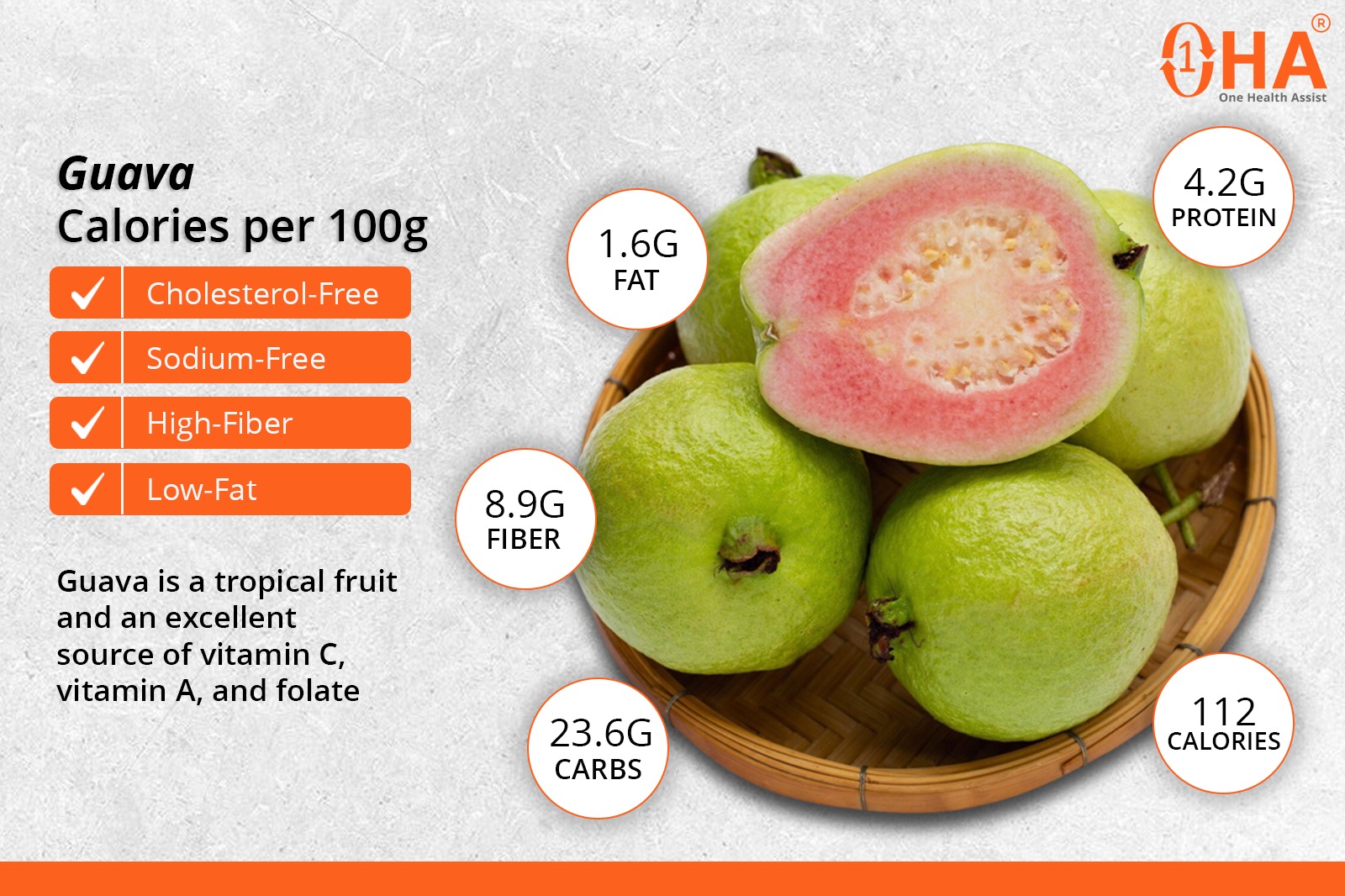
- Guava calories per 100 g are approximately 65–70 calorie
What makes these calories valuable is the nutrition that comes with them. Guava is rich in:
- Dietary fibre, which supports digestion and keeps you full longer
- Vitamin C, which boosts immunity and skin health
- Antioxidants, which help reduce inflammation and oxidative stress
- Essential minerals like potassium and magnesium, which support heart and muscle function
People often search “how many calories in guava” because guava tastes sweet but does not contribute excessive calories. Whether you eat one whole guava or measure guava calories per 100 grams, the fruit remains nutrient-dense, filling, and suitable for daily consumption when eaten in moderation.
Calories in One Guava
One of the most common questions is about calories in one guava. A medium-sized guava typically weighs around 100 grams and contains approximately 65–70 calories.
These 1 guava calories come mainly from natural carbohydrates, with very little fat. The fiber content in one guava slows digestion, helping you feel full for longer. Because of this, calories in one guava are considered efficient calories that support energy without promoting fat storage.
How Many Calories in 1 Guava?
If you are tracking food intake, you may wonder how many calories in 1 guava exactly. On average, how many calories in one guava depends on size and ripeness, but it usually falls between 65 and 70 calories.
Knowing how many calories in guava makes it easier to include the fruit in meal planning. Since 1 guava calories are low, guava works well as a mid-meal snack, breakfast fruit, or evening hunger option.
Guava Calories 100g
Nutrition labels often mention calories per 100 grams. Guava calories 100g is approximately 68 calories, making it a low-calorie fruit by standard measures.
Understanding 100 gm guava calories helps people who follow calorie-measured diets or use food tracking apps. Since many guavas naturally weigh close to 100 grams, calculating guava calorie 100g is practical and realistic for daily consumption.
Nutritional Breakdown
Calories alone do not define a food’s health value. Understanding where guava calorie come from explains why guava is considered healthy.
Pointers are used here only for clarity:
- Carbohydrates: Primary source of guava calories
- Dietary Fiber: Helps regulate digestion and blood sugar
- Protein: Small amount, supports satiety
- Fat: Negligible, keeping guava calories low
This balanced profile explains why people searching how many calories in guava often choose guava over processed snacks.
How Much Calories in Guava Compared to Other Fruits
Many people compare fruits to understand how much calories in guava versus others. While all fruits are nutritious, calorie levels differ significantly.
Guava contains fewer calories than bananas and mangoes while offering more fiber. When comparing guava calorie to apples or grapes, guava provides greater fullness per calorie. This makes guava a preferred fruit in calorie-conscious diets.
Comparison Table: Guava Calorie vs Other Fruits (per 100g)
| Fruit | Calories | Fiber | Sugar Level |
| Guava | 68 kcal | 5.4 g | Low–Moderate |
| Apple | 52 kcal | 2.4 g | Moderate |
| Banana | 89 kcal | 2.6 g | High |
| Mango | 60 kcal | 1.6 g | High |
| Papaya | 43 kcal | 1.7 g | Moderate |
| Grapes | 69 kcal | 0.9 g | High |
Weight Management
Low calorie density makes guava ideal for weight management. Since guava calories are moderate and fiber is high, the fruit helps control appetite.
Eating guava reduces cravings for sugary snacks. Because calories in one guava are limited, it fits well into calorie-restricted diets. Over time, including guava can support gradual and sustainable weight loss.
How Many Calories in One Guava for Dieters?
Dieters often ask how many calories in one guava to plan meals accurately. With approximately 68 calories, one guava does not disrupt calorie goals.
The fiber content helps dieters stay full longer. This makes calories in one guava ideal for snack replacements and hunger control.
Blood Sugar Control
Despite natural sugars, guava calories do not cause rapid blood sugar spikes. Fiber slows sugar absorption, making guava suitable in moderation for blood sugar control.
Knowing how many calories in guava helps portion management, which is essential for stable glucose levels.
Calorie in Guava With and Without Peel
Eating guava with the peel does not significantly increase its calorie content. The outer peel of guava is very low in calories and contains minimal carbohydrates or fat. This means that whether you eat guava with the peel or remove it, guava calories remain almost the same.
The main nutritional difference lies not in calories, but in fibre content. Guava peel contains a good amount of insoluble fibre, which supports digestion, improves bowel movement, and increases the feeling of fullness after eating. When the peel is removed, the total fibre intake slightly decreases, but the calorie difference is negligible.
Best Time to Eat for Calorie Utilization
Eating guava in the morning or between meals allows better calorie utilization. Guava calories consumed earlier are used efficiently for energy.
Late-night consumption may cause mild digestive discomfort due to fiber content.
Calories in Different Forms
The calorie content of guava can change significantly depending on how it is prepared and consumed. Fresh, whole guava contains the lowest number of calorie, while processed forms often contain added sugar and lose fibre, which increases calorie density and affects blood sugar levels.
Fresh guava is the most nutritionally balanced option. It retains its natural fibre, which slows digestion and keeps you full, while keeping calories moderate.
When comparing different forms:
-
Fresh guava (raw, whole):
Contains approximately 65–70 calories per 100 grams. It is rich in fibre, vitamin C, and antioxidants, making it ideal for daily consumption and calorie control.
-
Guava juice:
Juicing removes most of the fibre while concentrating natural sugars. A glass of guava juice can contain 100–150 calories or more, especially if sugar is added. Without fibre, sugar is absorbed faster, leading to quicker blood sugar spikes.
-
Guava jam or jelly:
Jams often contain added sugar or jaggery. This significantly increases calorie content, often providing 200–250 calories per 100 grams, while offering much less fibre than fresh fruit.
-
Dried guava:
Drying removes water, making calories more concentrated. Dried guava can contain 250–300 calories per 100 grams, and is easy to overeat due to smaller portion size.
If you are tracking 100 gm guava calories, choosing fresh guava is always the best option. It delivers the lowest calories with the highest fibre and nutrient content, helping you stay full and meet health goals without unnecessary sugar or calorie overload
Pros and Cons of Guava Calorie
Pros of guava calorie & nutrition
Low to moderate in calories
-
A medium guava typically provides ~37–40 kcal, and ~65–70 kcal per 100 g, making it a low-energy fruit suitable for calorie-conscious diets and weight management.
High fibre for better fullness
-
Guava is among the higher-fibre common fruits (roughly 5–6 g fibre per 100 g, depending on variety). Fibre helps:
-
control hunger
-
reduce unnecessary snacking
-
improve bowel regularity and digestion
-
-
The combination of fibre and low energy density increases satiety compared with many similarly caloric fruits.
Supports weight loss
-
Because it delays gastric emptying and is low in fat, guava can reduce overall calorie intake when used as a snack replacement or part of a meal plan.
Diabetes-friendly in moderation
-
Guava has a relatively low glycaemic effect and the soluble fibre slows carbohydrate absorption. Eating controlled portions (for example, one small fruit or ~100 g) is advisable. If you have diabetes or glucose regulation issues, confirm portion guidance with your clinician.
Rich in vitamin C and antioxidants
-
Guava supplies a high amount of vitamin C and other antioxidants per calorie, supporting immune function, skin repair, and recovery from minor illness or oxidative stress.
Heart-friendly nutrients
-
The fibre and potassium in guava contribute to healthy cholesterol and blood-pressure profiles without adding excess fat or calories.
Practical benefits and uses (added)
-
Versatile: eaten raw, added to salads, blended in smoothies, or used in low-sugar salsas and chutneys.
-
Ripeness: choose slightly soft fruit with a fragrant aroma; underripe fruit is firmer and more astringent.
-
Storage: refrigerate ripe guavas for up to 3–5 days to slow spoilage.
Cons of guava calorie & nutrition
Digestive discomfort if overeaten
-
Very high fibre means excess intake can cause bloating, gas, cramping, or loose stools. Those with sensitive guts or IBS should introduce guava gradually.
Seeds may be problematic for some
-
Seeds are edible and add fibre, but they are hard and can be uncomfortable to chew; older adults or people with dental issues may prefer deseeded preparations.
Processed forms can be caloric
-
Guava juice, nectars, jams, candied or dried guava often contain added sugar and concentrated calories compared with fresh fruit; these negate many of the weight-management benefits.
Portion size still matters
-
Healthy food can add excess calories if overconsumed. Balance guava with protein or healthy fats for more sustained fullness.
Additional cautions
-
Allergies: rare but possible — stop consumption and seek advice if you notice hives, swelling, or breathing difficulty.
-
Medication interactions: if you are on potassium-affecting medication, discuss high-potassium foods with your clinician.
Common Myths About Guava Calorie
Guava is often misunderstood because it is sweet and filling, which leads many people to assume it is high in calorie or sugar. In reality, most concerns around guava come from misinformation, not from its actual nutritional profile.
Myth 1: Guava is a high-calorie fruit
Fact: Guava is a moderate-calorie fruit.
One medium guava contains only about 37–40 calories, and even 100 grams of guava provides roughly 65–70 calories. This is lower than many commonly eaten fruits and far lower than most packaged snacks.
Myth 2: Guava causes weight gain
Fact: Guava does not cause weight gain on its own.
Weight gain happens when total daily calorie intake consistently exceeds the body’s needs. Guava is high in fibre and low in fat, which actually helps control hunger and reduce overeating. When eaten in reasonable portions, guava can support weight management rather than hinder it.
Myth 3: People with diabetes should avoid guava
Fact: Guava is generally safe for people with diabetes when eaten in moderation.
Guava has a low glycaemic index and high fibre content, which slows the absorption of sugar into the bloodstream. Eating guava whole (not as juice) helps prevent rapid blood sugar spikes.
Myth 4: Guava has too much sugar to be healthy
Fact: The sugar in guava is natural fruit sugar and relatively low compared to many fruits.
Guava contains about 8–9 grams of sugar per 100 grams, which is lower than bananas, mangoes, and grapes. The fibre in guava balances this sugar, making its blood sugar impact gentler.
Myth 5: Eating guava daily is unhealthy
Fact: Guava can be eaten daily in moderate amounts.
One to two guavas a day fit well into a balanced diet and contribute fibre, vitamin C, and antioxidants without pushing calorie intake too high.
FAQs on Guava
How many calorie in one guava?
One medium guava contains around 65–70 calories. These calorie in one guava come from natural carbohydrates and are supported by fiber. This makes guava filling and nutritious. Compared to processed snacks, 1 guava is healthier and more balanced. It is suitable for daily consumption.
How many calorie in guava per 100g?
Guava calorie 100g are approximately 68 calories. This measurement is commonly used in nutrition planning. 100 gm guava calorie also include fiber and vitamin C. It is a reliable reference for calorie tracking. Most guavas naturally fall close to this weight.
Is guava good for weight loss due to its calorie?
Yes, low enough to support weight loss. High fiber reduces hunger and overeating. One guava are easy to fit into calorie-restricted diets. Guava also helps control sugar cravings. It supports sustainable weight management.
How much calorie in guava compared to banana?
How much calorie in guava is significantly lower than banana. A banana contains over 100 calorie, while guava contains around 68. Guava also offers more fiber.
Can diabetics eat guava considering its calorie?
Yes, guava can be eaten in moderation. Guava released slowly due to fiber. This helps avoid sugar spikes. Portion control is important. Medical advice is recommended for personalized diets.
Thoughts
Guava is a nutritious fruit with balanced calorie content. Whether you are checking guava calorie, how many calorie , or one guava, the answer remains consistent it is a smart dietary choice.
With high fiber, moderate sugars, and controlled calorie, guava supports weight management, digestion, and overall health. Including fresh guava in your diet helps you enjoy natural sweetness without excess calorie.
DISCLAIMER: THIS WEBSITE DOES NOT PROVIDE MEDICAL ADVICE
The information, including but not limited to, text, graphics, images and other material contained on this website are for informational purposes only. No material on this site is intended to be a substitute for professional medical advice, diagnosis or treatment. Always seek the advice of your physician or other qualified health care provider with any questions you may have regarding a medical condition or treatment and before undertaking a new health care regimen, and never disregard professional medical advice or delay in seeking it because of something you have read on this website.