
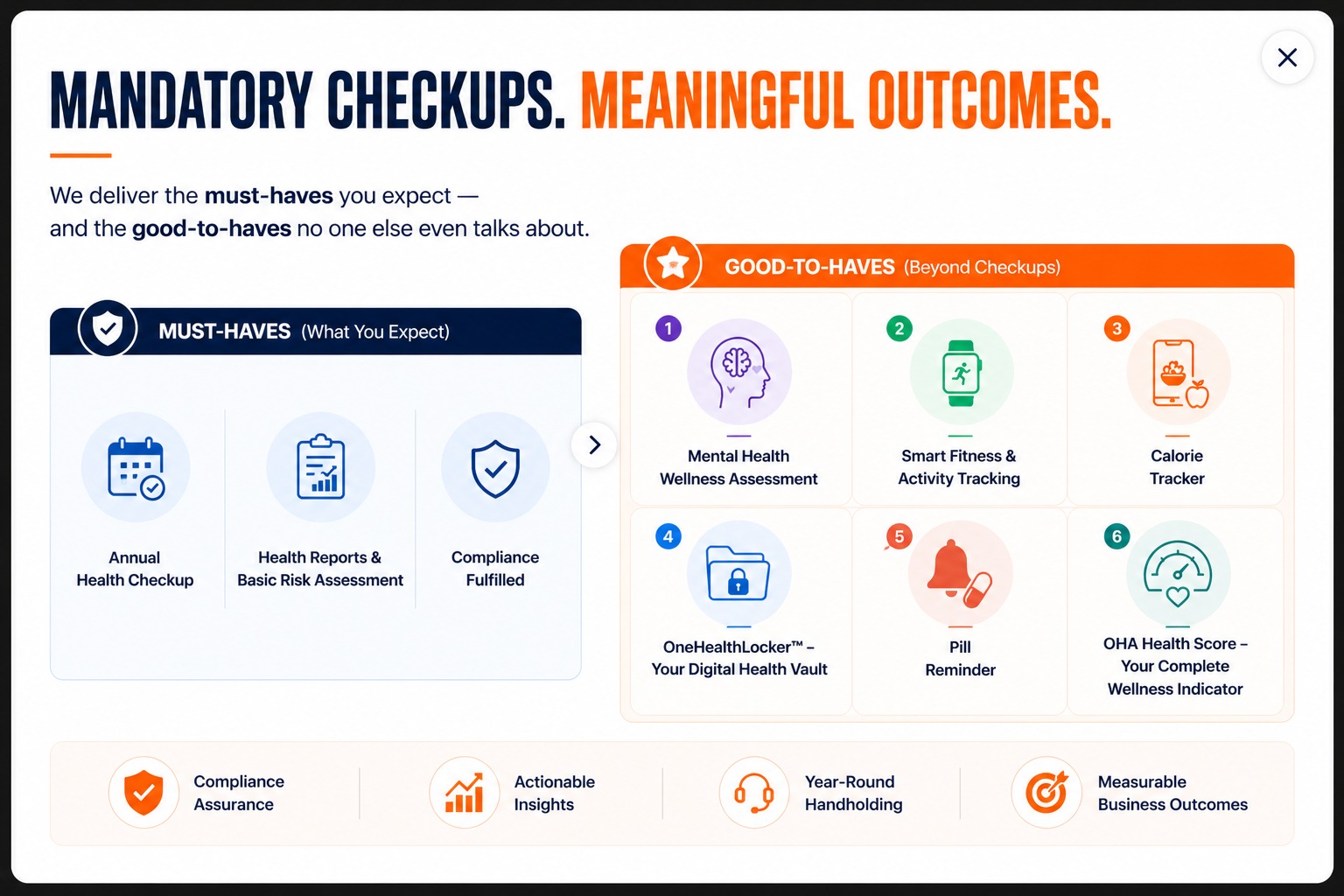
In the modern workplace, the most valuable asset isn’t the software, the office space, or the intellectual property it’s the people. An annual health checkup for employees is a systematic medical evaluation designed to assess the overall health of a workforce, identifying potential risks before they escalate into chronic conditions.
Table of Contents
- Annual Health Checkup for Employees: What It Is and Why It Matters
- Why Employee Health Checkups Are Becoming Non-Negotiable
- Types of Employee Health Checkups and What They Solve
- Basic Annual Health Checkup
- Standard Full Body Checkup
- Master Health Checkup
- Executive Health Packages
- Customized Corporate Packages
- What Tests Are Included in a Standard Employee Annual Health Checkup Package
- Core Blood Tests
- Additional Tests
- Advanced Tests
- Key Benefits of Annual Health Checkup for Employees
- The Real Problem: Ignoring Preventive Health
- Understanding the Science Behind Preventive Health Checkups
- Insight Box: Practical Observations from Corporate Health Programs
- Pros and Cons of Corporate Health Checkups
- Full Body Checkup Price in India
- How to Schedule an Annual Health Checkup for Employees Online
- On-Site vs Lab-Based Checkups: What Works Better?
- How to Choose the Best Health Checkup Packages
What Is an Annual Health Checkup for Employees?
why an annual health checkup for employees isn’t a “nice-to-have” anymore it’s a business decision. A corporate health checkup is a structured, preventive medical examination designed specifically for working professionals. It covers everything from blood pressure and blood sugar to organ function and early cancer markers giving both employees and employers a clear picture of overall health before problems become expensive emergencies.
India’s health check-up market was valued at ₹10,000 crore+ in 2024 and is growing at a CAGR of 11.1% through 2030. That growth isn’t random it’s companies finally recognising that healthy teams outperform sick ones, every single time.
Why annual health checkup matters for employees and employers alike.
Regular health screenings detect lifestyle diseases common in India, such as diabetes, hypertension, and obesity. New Labour Codes mandate free annual health checkups for employees over 40, making it a compliance essential. Companies offering these programs see reduced absenteeism and higher engagement. Employees gain peace of mind through early detection and personalized advice.
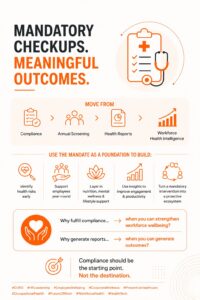
Types of Annual Health Checkup Packages for Employees
In the same way that a high-performance engine requires periodic tuning, the human body needs regular calibration to handle the stressors of a corporate environment. Choosing the right health checkup program involves understanding that “one size fits all” rarely works in medical diagnostics. Different job roles, age groups, and lifestyle factors necessitate varied levels of scrutiny.
1. Basic Annual Health Checkup (Entry-Level Package)
These are often the entry point for many startups. They focus on the essentials: a blood check up, basic urine analysis, and a physical examination. This is the “routine check up” that keeps a pulse on the general well-being of a younger workforce.
Ideal for startups and SMEs with budget constraints. This covers foundational health markers:
-
Complete Blood Count (CBC)
-
Blood Sugar (Fasting & PP)
-
Lipid Profile
-
Liver Function Test (LFT)
-
Kidney Function Test (KFT)
-
Urine Routine
-
ECG (Electrocardiogram)
-
Blood Pressure Monitoring
Typical full body checkup price range: ₹800 – ₹2,500 per employee
This is what most people mean when they search for “affordable full body checkup” or “general check up near me.” It’s a solid baseline but doesn’t cover advanced screenings like thyroid, Vitamin D, or cancer markers.
2. Comprehensive / Master Health Checkup (Mid-Level Package)
Moving up the ladder, a master checkup or master health checkup provides a deep dive. This is where you see a detailed body profile test, including lipid profiles (cholesterol), liver function tests (LFT), and kidney function tests (KFT).
The most popular choice for mid-sized companies and IT firms. This is a full body checkup test list that covers over 50–80 parameters:
-
Everything in Basic Package +
-
Thyroid Profile (T3, T4, TSH)
-
Vitamin B12 & Vitamin D
-
HbA1c (3-month blood sugar average)
-
Chest X-Ray
-
Ultrasound Abdomen
-
Eye Checkup (Vision Test)
-
BMI & Obesity Screening
-
Tumour Markers (optional)
Full body checkup cost: ₹2,500 – ₹6,000 per employee
This is the sweet spot for most corporate health checkup programs. Searching for “master health checkup” or “complete health checkup” typically leads to packages in this range.
3. Executive / Premium Full Body Health Checkup (Advanced Package)
For senior management or employees in high-stress roles, a whole body checkup is often recommended. These packages are more exhaustive, frequently including advanced imaging like a full body scan price evaluation, cardiac stress tests (TMT), and specialized screenings for cancer markers or hormonal imbalances.
Designed for senior management, high-stress roles, or employees above 40 years of age:
-
Everything in Comprehensive Package +
-
Cardiac Stress Test (TMT)
-
Pulmonary Function Test (PFT)
-
Bone Density Scan (DEXA)
-
Advanced Cardiac Markers (hs-CRP, Homocysteine)
-
Cancer Screening (PSA for men, CA-125 for women)
-
Full Body Scan / MRI (if included)
-
Specialist Consultation (Cardiologist, Physician)
-
Diet & Nutrition Counselling
Full body test price: ₹6,000 – ₹20,000 per employee
4. On-Site Corporate Health Screening
Many diagnostic platforms now offer on-site medical checkup services where the lab team comes to your office. Blood samples are collected at the workplace, reports are digitally delivered within 24–48 hours. This is especially useful for bulk employee testing — say, for 50+ employees at once.
Best for: Manufacturing units, BPOs, IT parks, and large enterprises looking for hassle-free employee health screening without sending staff to a lab.
- High-end screening + lifestyle consultation
- Includes cardiac risk profiling
- Used for leadership roles
Benefits of an Annual Health Checkup for Employees
1. Early Detection Saves Lives and Company Costs
Many lifestyle diseases hypertension, Type 2 diabetes, fatty liver, early-stage cancer show zero symptoms for years. By the time an employee feels the impact, the treatment cost is 3–5x higher than if it had been caught during a routine check up. Routine screenings identify risks before symptoms appear. Blood sugar, lipid profile, liver, and kidney function tests catch problems early, enabling timely intervention and better outcomes.
2. Boosts Productivity and Focus
An employee dealing with undiagnosed hypothyroidism, anaemia, or pre-diabetes will struggle with fatigue, brain fog, and inconsistent performance. They won’t know why they’re slipping. A complete body checkup gives answers. Companies with structured wellness programs including health checkups report a 20% increase in employee productivity on average.
3. Reduces Absenteeism and Healthcare Insurance Claims
Unplanned sick leaves are one of the most underestimated operational costs in Indian companies. A single hospitalisation event for a preventable condition can cost ₹1–5 lakh on the group insurance plan. Routine annual health checkups catch conditions early, allow timely intervention, and prevent the kind of sudden, extended absences that throw project timelines into chaos.
4. Improves Employee Retention and Morale
90% of employees intend to stay at their workplace when their well-being needs are genuinely met. Offering a comprehensive health checkup package sends a clear message: “We see you as a human being, not just a resource.” That emotional signal builds loyalty. Especially for Gen Z and millennial employees, wellness benefits including annual medical checkups are increasingly a deciding factor in whether they join or leave a company.
(Internal link: How to Build an Employee Benefits Program That Reduces Attrition)
5. Fulfils Legal and Regulatory Obligations
India’s Occupational Safety and Health Code (2024 amendments) made it mandatory for employers in specific sectors to conduct workplace health checks for their workforce. Even outside mandated categories, periodic medical examination is increasingly considered standard corporate governance practice. A structured annual health checkup for employees protects your organisation from compliance risk while positioning you as a responsible employer.
6. Mental Health Is Now Part of the Picture
The 2025 Corporate Wellness Index found that 86% of employees in India are struggling with some form of mental health challenge. Advanced health checkup packages now include basic mental health screenings, stress assessments, and counselling sessions. This is where modern health checkup packages go beyond the blood test — addressing the whole-body, whole-mind picture that defines real employee wellness.
7. Wellness Programs for Employee
When you run annual health checkups at scale, you start seeing patterns. High Vitamin D deficiency across the team? That tells you something about your work culture (too much screen time, not enough outdoor breaks). High HbA1c trends? Time for a nutrition intervention program. Aggregate (anonymised) health data from a complete body profile test gives HR and leadership teams the insight to design targeted wellness initiatives not just generic yoga sessions.
8. Statutory and Legal Compliance
In certain industries, particularly manufacturing or those involving hazardous materials, a medical health checkup is a legal requirement. Ensuring all employees have a valid body check record protects the company from legal liabilities.
9. Tax Benefits for Both Parties
In many regions, including India, expenses incurred on a preventive health check up (up to a certain limit like ₹5,000 under Section 80D) are tax-deductible. This makes the full body test an economically savvy move for individual employees as well.
10. Convenience Through At-Home and On-Site Options
Many labs offer full body checkup at home, ideal for busy teams. Corporate tie-ups enable on-site medical checkup services. India’s health check-up market is projected to grow at 11.1% CAGR, reaching USD 2.25 billion by 2030. 98% of employees who underwent preventive checkups reported better quality of life.
Consequences of Skipping Routine Checkups
We often ignore the “check engine” light in our own bodies because we are too busy chasing targets. However, the cost of neglect is far higher than any full body checkup price near me.
The Rise of Lifestyle Diseases
Sedentary desk jobs, high-caffeine intake, and poor sleep cycles are the hallmarks of modern corporate life. Without a routine check up, conditions like Fatty Liver Disease, Type 2 Diabetes, and Chronic Fatigue Syndrome go unnoticed. According to recent health surveys, nearly 40% of corporate employees in metropolitan areas show early signs of metabolic syndrome, often discovered only during a complete body profile test.
The Sugar Trap and Liver Stress
Many employees rely on “sugar-loaded drinks” and processed snacks to get through the day. This puts immense pressure on the liver and pancreas. A blood test packages screening can identify rising ALT/AST levels or HbA1c spikes before they lead to permanent organ damage. Non-alcoholic fatty liver disease (NAFLD) now affects approximately 25% of the global population, with a significant concentration in the urban, office-going demographic.
The Science of Preventive Screening: Myths vs. Reality
How Hydration and Nutrition Affect Results
Many people believe that a full body blood test price is only worth paying if they feel “sick.” In reality, hydration science tells us that even mild dehydration can skew blood test results, particularly kidney markers like creatinine.
Detox Myths vs. Reality
There is a common myth that “detox diets” can replace a medical check up. While drinking lemon water or green tea is healthy, it does not “cleanse” the body in a way that reverses chronic damage. Only a whole body test name sequence (like a Lipid Profile or Thyroid Profile) can give you the raw data needed to make clinical decisions.
Build a Healthier Diet Around Your Checkup Results
Your blood reports are only half the picture. What you eat daily directly impacts your HbA1c, lipid profile, Vitamin levels, and iron markers. Most employees focus on the checkup but ignore the diet patterns that shape those results year-round.
🥚 1 Boiled Egg Calories: The Perfect Pre-Checkup Protein
A boiled egg is one of the most bioavailable protein sources available roughly 6–7g of protein per egg with minimal carbs. It’s ideal before a fasting blood test because it doesn’t spike insulin, and its choline content supports liver health, which is directly measured in your LFT panel.
🍚 Calories in 1 Roti: Know Your Daily Carb Intake
Most Indians underestimate their daily carb load. A single roti carries approximately 70–100 calories depending on size and flour type. If you’re eating 4–6 rotis a day, that directly influences your fasting glucose and HbA1c readings two of the most critical markers in any annual health checkup.
🍗 100gm Chicken Protein: Best Lean Protein for Employees
100g of cooked chicken breast delivers approximately 30–31g of protein with very low saturated fat. For desk-job employees, adequate protein intake supports muscle health, reduces fatigue, and helps maintain healthy haemoglobin levels all of which show up in your CBC and iron panel during a full body checkup.
🫙 Calories in Curd: Gut Health & Immunity Booster
Curd (dahi) provides roughly 60–98 calories per 100g and is rich in probiotics, calcium, and Vitamin B12. A healthy gut microbiome reduces systemic inflammation — which directly lowers CRP levels, a key cardiac risk marker now included in many master health checkup packages. Make it a daily habit, not an occasional addition.
🥛 Calories in 250ml Milk: Your Daily Vitamin B12 Source
A standard 250ml glass of full-fat milk provides around 150 calories along with meaningful amounts of Vitamin B12, calcium, and Vitamin D. B12 deficiency is alarmingly common in Indian office workers and is directly linked to fatigue, brain fog, and nerve issues all detectable through a basic blood panel.
🌾 Oats Calories 100g : Best Breakfast for Pre-Diabetics
100g of oats contains roughly 370 calories with a low glycaemic index and high soluble fibre (beta-glucan). This makes oats one of the most effective foods for stabilising fasting blood sugar and reducing LDL cholesterol — two parameters your doctor will review closely if you’re in the 35+ employee risk group.
🥜 Calories in 100gm Peanuts: Smart Office Snacking
Peanuts pack approximately 567 calories per 100g dense but nutritious. They’re loaded with monounsaturated fats, magnesium, and plant protein. While they’re a far better snack than processed biscuits or chips, portion control is essential since excess intake can elevate triglycerides, a key lipid panel marker reviewed during your annual checkup.
🍲 Calories in Dal: Protein for Energy & Iron Levels
Dal averages 100–120 calories per 100g cooked and is one of India’s most accessible plant-based protein and iron sources. Regular consumption supports haemoglobin production, reduces anaemia risk, and provides steady energy release critical for employees who deal with mid-afternoon fatigue and concentration dips at work.
🫓 Calories in Dosa: South Indian Diet & Blood Sugar Impact
A plain dosa contains roughly 120–170 calories, but the fermented batter gives it a lower glycaemic impact than plain rice. However, loaded versions with ghee, potato masala, or cheese can double the calorie count. Knowing this matters if your fasting glucose or HbA1c was borderline in your last checkup report.
🥛 Calories in 500ml Milk: Full Day Calcium Tracker
500ml of milk provides approximately 300 calories and covers nearly 60% of your daily calcium requirement. This is especially relevant for employees with Vitamin D deficiency — one of the most commonly flagged results in Indian corporate health screenings. Pairing milk intake with sunlight exposure maximises calcium absorption and bone density over time.
Protein & Calories Comparison
| Food (cooked) | Quantity | Calories | Protein | Category |
|---|---|---|---|---|
| Boiled egg (whole) | 1 large | 72–77 | 6–6.5 g | Protein |
| Egg whites | 100 g | 52 | 11 g | Protein |
| Chicken breast (boiled, skinless) | 100 g | 160–165 | 29–31 g | Protein |
| Chicken thigh (boiled, skinless) | 100 g | 180–190 | 24–26 g | Protein |
| Roti (wheat, no oil) | 1 medium (~40g) | ~120 | ~3 g | Carb |
| Dosa (plain, no oil) | 1 medium (~100g) | ~110–120 | ~3–4 g | Carb |
| Dal (cooked, mixed) | 100 g | ~105–116 | ~7–9 g | Mixed |
| Curd (plain, full fat) | 100 g | ~60–70 | ~3.5 g | Dairy |
| Milk (whole) | 500 ml | ~300–310 | ~16 g | Dairy |
| Milk (whole) | 250 ml | ~150–155 | ~8 g | Dairy |
| Peanuts (roasted) | 100 g | ~580–600 | ~25–26 g | Nuts |
| Banana | 2 medium (~240g) | ~210–220 | ~2.5 g | Fruit |
| Oats (rolled, dry) | 100 g | ~380–390 | ~13–17 g | Carb |
Pros and Cons of Corporate Health Checkups
Pros
Prevents major diseases
Corporate health checkups help detect early signs of lifestyle diseases, heart problems, diabetes, and other hidden health issues before they become serious.
Builds trust between employer and employee
When companies invest in employee health, it sends a strong message that their well-being matters, which strengthens workplace trust and loyalty.
Improves overall workplace morale
Healthy employees usually feel more energetic, focused, and supported, which creates a more positive and productive work environment.
Enables structured health tracking
Regular checkups allow companies and employees to monitor health patterns over time, making it easier to take timely action when needed.
Supports early intervention and prevention
Instead of waiting for illness to affect work performance, companies can encourage early medical guidance and healthier habits.
Can improve productivity in the long run
When employees stay healthier, absenteeism may reduce and day-to-day efficiency can improve across teams.
Cons
Initial cost for companies
Organizing health checkups involves financial investment, especially when the company has a large workforce or wants advanced screening.
Requires coordination for large teams
Managing schedules, medical partners, reports, and follow-ups can be time-consuming and operationally complex.
Employees may ignore reports without follow-up
Even if checkup results are useful, they may not create real impact unless employees actually review them and act on the advice.
Can feel routine if not personalized
If the process is too generic, employees may not see the value, which reduces engagement and participation.
Needs proper communication and privacy handling
Health data must be handled carefully, and employees should clearly understand how their information will be used and protected.
Pros and Cons of Corporate Health Packages
| Feature | Pros | Cons |
|---|---|---|
| Bulk Pricing | Corporate packages usually offer a much lower full body checkup cost per head than individual bookings, making them highly cost-effective for companies. | These packages may include tests that are not equally relevant for every employee, which can reduce value in some cases. |
| Convenience | On-site camps or full body checkup at home options save time, reduce travel effort, and make participation easier for employees. | In mobile camps, the quality of equipment, setup, and testing conditions may not always match a fully equipped static diagnostic lab. |
| Health Tracking | Corporate health packages allow companies to monitor employee wellness trends year after year and identify recurring health risks early. | Some employees may hesitate to participate fully because of privacy concerns or fear of how their health data might be used. |
| Standardization | Every employee receives the same full body test name list, which ensures fairness and a consistent screening process across the organization. | A standardized package may not suit everyone, especially people with pre-existing conditions, different age groups, or specific medical needs. |
Full Body Checkup Price in India
The price of a full body checkup in India varies depending on the number of tests included, the diagnostic provider, and whether the package includes basic screening or advanced add-ons. Most packages cover blood tests, cardiac screening, imaging, urine tests, and optional additional checks.
Common Tests Included in a Full Body Checkup
Blood Tests
These tests help assess general health, blood composition, sugar levels, cholesterol, liver function, kidney function, thyroid activity, vitamin levels, and iron status.
- CBC (Complete Blood Count)
- Fasting Blood Sugar and HbA1c
- Lipid Profile: Total Cholesterol, LDL, HDL, Triglycerides
- Liver Function Tests: SGOT, SGPT, Bilirubin, Albumin
- Kidney Function Tests: Serum Creatinine, BUN, Uric Acid
- Thyroid Profile: T3, T4, TSH
- Vitamin D and Vitamin B12
- Iron Studies for anaemia screening
Cardiac Screening
These tests check heart health and blood pressure levels.
- ECG (Resting)
- Blood Pressure
Imaging and Physical Assessment
These tests help evaluate internal organs and overall body measurements.
- Chest X-Ray (PA View)
- Ultrasound of Abdomen and Pelvis
- BMI and Anthropometry
Urine and Other Tests
These are used to detect infections and other hidden health concerns.
- Urine Routine and Microscopy
- Stool Examination, in some packages
Optional Add-ons
Some full body checkup packages also include additional screenings based on age, gender, and health condition.
- Cancer markers such as PSA and CA-125
- HIV/STI screening, where relevant
- Eye and dental checkup
- Bone Density Test (DEXA)
Typical Price Range
| Package Type | Price Range |
|---|---|
| Basic Checkup | ₹500 – ₹1,500 |
| Standard Full Body Checkup | ₹1,500 – ₹4,000 |
| Master Health Checkup | ₹4,000 – ₹10,000+ |
How to Schedule an Annual Health Checkup for Employees Online
Scheduling an annual health checkup for employees online is now much easier because modern health platforms combine booking, lab-test access, and record management in one flow. On One Health Assist, the homepage shows access points like Book Wellness, Doctor Consultation, Lab Test, Medicine Subscription, OneHealth Locker, and Quick Order Corporate Wellness, which makes it practical for both individuals and companies to handle checkups from a single system.
A simple process usually looks like this:
- Choose a diagnostic partner that supports corporate checkups, home sample collection, or both.
- Compare health packages based on age group, role, and risk level. One Health Assist’s booking page highlights package comparison and even allows users to create their own package, which is useful when a company wants to avoid one-size-fits-all screening.
- Decide between on-site and lab-based testing. For larger teams, on-site collection reduces drop-offs. For smaller teams, lab-based booking is usually simpler.
- Schedule employees in batches so fasting requirements, sample collection, and work shifts do not clash.
- Share preparation instructions such as fasting time, document requirements, and reporting time.
- Collect, store, and review reports in one place. One Health Assist’s secure repository supports record upload, health insights, health scores, and permission-based sharing, which makes follow-up easier after the test cycle.
Home sample collection
One useful advantage is home sample collection. One Health Assist’s lab-test content says users can book diagnostic tests online and schedule sample collection at home, office, school, or other locations. That is especially helpful for employee checkups because it reduces travel time and improves participation.
For corporate teams, the best workflow is usually this: book the package, split the workforce into test batches, collect samples at a convenient location, and then store the results in a secure repository for future comparison. That turns a one-time checkup into an ongoing health record system.
On-Site vs Lab-Based Checkups
Both models work. The better choice depends on team size, location spread, and how much friction you want to remove.
On-Site Checkups
On-site screening works well when the company wants maximum participation with minimum disruption. Employees do not need to travel, and sample collection can be aligned with office hours. This model is usually better for bulk annual screening, especially when the provider supports corporate wellness coordination. One Health Assist’s site includes a dedicated Corporate Wellness entry point, which suggests a workflow built for organizational bookings rather than only individual appointments.
Lab-Based Checkups
Lab-based checkups are a better fit when a company wants more flexibility, more test options, or a lower-cost setup. One Health Assist’s booking page highlights trusted lab tests, package comparison, popular health packages, and diagnostic tests, which is useful when employees need more customized screening rather than a fixed camp-style model.
The Practical Middle Ground
For many companies, the most efficient setup is a hybrid model:
- smaller teams are booked at labs or through home collection
- larger teams are handled on-site
- reports are stored centrally for follow-up
In simple terms, choose on-site for convenience and participation, and lab-based for flexibility and broader package selection. If the provider supports home sample collection plus digital record storage, the difference between the two becomes much smaller in practice.
How to Choose the Best Health Checkup Packages
When comparing health test packages, do not look only at the headline price. The real value depends on what is included, how the process works, and whether the reports are easy to use later.
Check the package structure
- the number of tests included
- whether blood, urine, imaging, or doctor consultation is part of the package
- whether it is suitable for general screening or more advanced risk checks
One Health Assist’s booking page shows that users can compare packages and also create their own package, which is useful when a company wants to include only the tests that matter for a specific employee group.
Look for easy booking and flexible collection
A strong provider should make booking simple and allow sample collection at a convenient place. One Health Assist says users can book diagnostic tests online with home sample collection, which is a practical feature for employees who may not have time to visit a lab during working hours.
Check whether records stay organized
After the test is done, the problem is often not the collection. The problem is follow-up. A good platform should help store reports properly and make them easy to retrieve later. One Health Assist’s secure health repository is designed for exactly that, with encrypted storage, health insights, safe sharing, and unlimited storage for medical history. It also supports family record management, which shows the platform is built for long-term record continuity, not just one-off testing.
Prioritize follow-up support
The best package is the one that helps users understand the report. One Health Assist’s repository claims to provide health insights, a health score, and lifestyle guidance, which is useful after a corporate screening cycle because the checkup should lead to action, not just data collection.
A simple decision rule
Use this rule when choosing a package:
- low-risk employees: basic screening
- mid-risk employees: standard full body checkup
- senior staff or high-risk cases: master health checkup or customized package
Full Body Checkup Test List with Price Overview
When looking for health checkup packages, the price can vary based on the city and the complexity of the lab. Below is a typical breakdown of what to expect in a full body checkup test list with price in the Indian market (Estimated).
Basic Health Package (₹999 – ₹1,999)
-
Complete Blood Count (CBC)
-
Blood Sugar (Fasting)
-
Urine Routine
-
Basic Kidney Function (Creatinine)
-
Basic Liver Function (SGOT/SGPT)
Comprehensive Employee Package (₹2,500 – ₹4,999)
-
All tests in Basic Package
-
Lipid Profile (Total Cholesterol, HDL, LDL)
-
Thyroid Profile (T3, T4, TSH)
-
Vitamin D & B12
-
HbA1c (3-month average glucose)
-
ECG (Resting)
Executive/Master Health Checkup (₹5,000 – ₹12,000+)
-
All tests in Comprehensive Package
-
Cardiac Markers
-
Ultrasound (Abdomen & Pelvis)
-
TMT (Treadmill Test) or Stress Echo
-
Pulmonary Function Test (PFT)
-
Cancer Markers (PSA for Men, Pap Smear/CA-125 for Women)
Practical for Implementing Employee Checkups
-
The “Friday-Monday” Rule: Schedule checkups on Fridays or Mondays to allow employees to use the weekend for any follow-up consultations without disrupting the work week.
-
Confidentiality is Key: Ensure the diagnostic labs provide individual reports directly to the employee. The company should only receive an “Anonymized Executive Summary” of the workforce’s health.
-
Gamify Wellness: Offer small incentives (like a healthy lunch voucher) for employees who complete their full body test within the first month of the program launch.
-
Choose NABL Accredited Labs: Always ensure your health packages are processed in NABL-accredited facilities to guarantee accuracy.
-
Pre-Checkup Briefing: Send a simple guide on “How to prepare” (e.g., 10-12 hours of fasting) to ensure the blood check up results are accurate.
People Also Ask
What tests are included in a standard employee annual health checkup package?
A standard employee health checkup typically includes a Complete Blood Count (CBC), blood sugar (fasting + HbA1c), lipid profile, liver and kidney function tests, thyroid profile, ECG, chest X-ray, urine routine, and a physician consultation. Premium packages add Vitamin D, B12, ultrasound abdomen, cancer markers, and stress tests. The exact full body checkup test list varies by provider and package tier.
What is the typical full body checkup cost for employees in India?
Full body checkup prices for employees in India range from ₹800–₹2,500 for basic packages, ₹2,500–₹6,000 for comprehensive master health checkup plans, and ₹6,000–₹20,000 for executive-level screenings. Bulk corporate discounts can bring the per-employee cost down by 20–40% compared to individual bookings.
How to schedule an annual health checkup for employees online?
Most diagnostic platforms allow online corporate bookings through a dedicated HR portal or by contacting their enterprise sales team. You can book on-site sample collection for your office, choose packages by employee age group, and receive consolidated digital reports. Platforms like One Health Assist offer end-to-end corporate health checkup management, including scheduling, sample collection, and report delivery.
Are corporate health checkup expenses tax-deductible in India?
Yes. Employer-sponsored health checkup expenses are generally deductible as a business expense under the Income Tax Act. Employees can claim deductions on preventive health checkups under Section 80D — up to ₹5,000 within the overall medical insurance premium limit. Consult your CA for entity-specific applicability.
What is the difference between a routine check up and a master health checkup?
A routine check up covers basic parameters — blood pressure, blood sugar, CBC, and a physical examination. A master health checkup (also called a complete body checkup or comprehensive health screening) includes 60–100+ parameters, covering organ function, hormones, vitamins, imaging like ultrasound and X-ray, and specialist consultations. Master checkups are recommended annually for employees aged 35 and above.
How often should employees get a health checkup?
For employees under 35, an annual health checkup is generally recommended. For those 35 and above, or employees with a family history of heart disease, diabetes, or cancer, bi-annual screenings are advisable. Employees in high-stress roles, night-shift workers, or those with sedentary lifestyles benefit most from more frequent preventive health check up scheduling.
FAQs: Corporate Health Checkup Packages
Can a company arrange a full body checkup at home or at the office for employees?
Yes. Many diagnostic labs now offer full body checkup at home or on-site office sample collection. A trained phlebotomist visits the location, collects blood and urine samples, and digital reports are shared within 24–72 hours. This significantly increases employee participation and reduces time away from work.
What is the best corporate health checkup package for IT employees?
IT employees typically need screenings that address sedentary lifestyle risks: lipid profile, blood sugar (HbA1c), thyroid, Vitamin D & B12, eye examination, musculoskeletal assessment, and mental health screening. A comprehensive master checkup package with an eye checkup add-on is the most suitable choice for tech teams who spend 8+ hours in front of screens.
How do I compare health checkup packages near me for my company?
Compare packages based on: (1) number of parameters covered, (2) NABL/NABH accreditation of the lab, (3) report turnaround time, (4) inclusion of doctor consultation, (5) on-site collection availability, and (6) whether digital, HR-accessible reports are offered. Don’t just compare full body checkup price — compare what’s actually being tested.
Is an annual health checkup mandatory for employees in India?
Under India’s Factories Act and the 2024 Occupational Safety and Health Code amendments, periodic medical examinations are mandatory for employees in specific hazardous industries and factories. For other sectors, while not universally mandated, health checkups are strongly recommended and increasingly considered a standard corporate duty-of-care practice.
What should HR look for when choosing a corporate health checkup provider?
Key factors: NABL/NABH accreditation, home/on-site collection capability, data privacy compliance, customisable packages by age and gender, dedicated account management, bulk pricing, digital report portal access, and inclusion of physician consultation. The provider’s turnaround time for reports and ability to handle 100+ employees simultaneously also matters for large organisations.
How does One Health Assist support corporate health checkup programs?
One Health Assist offers customisable annual health checkup packages for employees from basic preventive screenings to comprehensive executive health packages. Services include on-site sample collection, NABL-accredited lab processing, 24–48 hour digital reports, and expert teleconsultations. HR teams get centralised access to aggregate health data for wellness planning, while employee data remains private and secure.
Conclusion
The shift toward an annual health checkup for employees marks a maturing corporate culture that values longevity over short-term output. Whether you are looking for an affordable full body test price for a small team or a comprehensive master health checkup for a global workforce, the goal remains the same: ensuring that every individual has the information they need to lead a long, healthy life.
DISCLAIMER: THIS WEBSITE DOES NOT PROVIDE MEDICAL ADVICE
The information, including but not limited to, text, graphics, images and other material contained on this website are for informational purposes only. No material on this site is intended to be a substitute for professional medical advice, diagnosis or treatment. Always seek the advice of your physician or other qualified health care provider with any questions you may have regarding a medical condition or treatment and before undertaking a new health care regimen, and never disregard professional medical advice or delay in seeking it because of something you have read on this website.